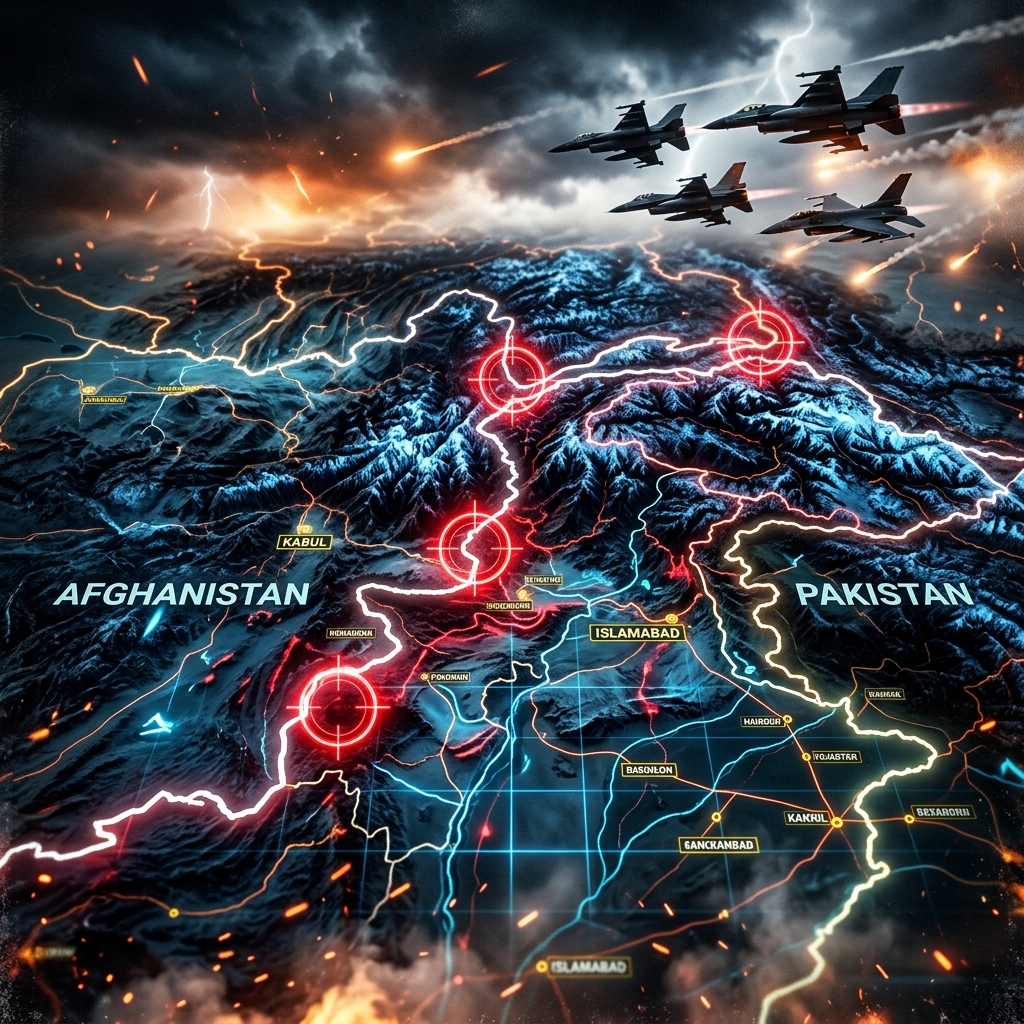
Pakistan launched overnight airstrikes on Afghanistan's eastern provinces of Khost, Kunar, and Paktika on June 10, 2026, killing at least 13 people including 11 children, according to Taliban government spokesman Zabihullah Mujahid — while Pakistan insists only 26 militants were killed in what it called "precise and calibrated" anti-terror operations.
What Triggered the Strikes
The strikes were carried out as part of Pakistan's ongoing Operation Ghazab-ul-Haq, a military campaign targeting what Islamabad describes as terrorist infrastructure used to plan and execute attacks inside Pakistan. According to Pakistani sources, the immediate trigger was a deadly attack on a Frontier Constabulary post in Peshawar that killed six Pakistani paramilitary soldiers. Pakistan's Information Minister Attaullah Tarar confirmed the strikes on social media, saying they targeted "hideouts and safe havens" of Tehreek-e-Taliban Pakistan (TTP) militants operating from Afghan soil, and that 26 fighters linked to the group were eliminated.
What Afghanistan Says
The Taliban government told a completely different story. Zabihullah Mujahid stated that Pakistani forces violated Afghan airspace and bombed civilian homes. In Khost province's Spera district, a house was struck, killing nine people — most of them children — and wounding 10 others. In Paktika's Barmal district, three more civilians were killed when another residential home was hit. In total, the Taliban confirmed 13 deaths including 11 children, one woman, and one elderly man, with 14 others wounded. Mujahid released photographs documenting the casualties and called the strikes "a humanitarian crime and act of aggression."
A Red Crescent worker in Khost told CBS News that the bodies of children remained at the strike site until rescue workers arrived in the morning, and that the family living there had no known connection to any militant activity.
Why the Numbers Are Contested
Both sides have strong political reasons to skew the figures. Pakistan needs to justify cross-border military action to its domestic audience and international partners by framing it as counter-terrorism. The Taliban, on the other hand, has every incentive to highlight civilian suffering to build pressure against Pakistan internationally. What is independently confirmed is that residential homes were hit and civilians, including children, are among the dead. The UN reported in May 2026 that cross-border fighting had killed at least 372 Afghan civilians and injured 397 more in just the first three months of the year, which gives important scale to how serious this pattern has become.
A Pattern, Not an Isolated Strike
This is not the first time Pakistan has struck inside Afghanistan since the Taliban took power in August 2021 — it is the eighth such round of airstrikes. Previous rounds in February 2026 killed at least 18 civilians and drew strong condemnation from Kabul. Chinese-brokered mediation efforts between Islamabad and Kabul have repeatedly failed to produce any durable ceasefire or mechanism for managing cross-border tensions. The June 10 strikes ended more than a month of relative calm along the border, which had briefly raised hopes for a possible diplomatic channel reopening.
What This Means Going Forward
The danger in this conflict is the cycle it creates. Pakistan strikes in response to militant attacks on its soldiers. Afghanistan denies sheltering those militants and points to civilian dead. Each round deepens the trust deficit between the two governments, makes negotiations harder, and leaves border communities — on both sides — increasingly exposed. With no functional diplomatic mechanism in place and both governments holding firm positions, the likelihood of another round of escalation remains high.
For now, the casualty numbers should be treated as politically contested until independently verified. The bigger story, however, is not just the body count — it is how a broken bilateral relationship between two nuclear-adjacent states keeps costing civilian lives with no end in sight.