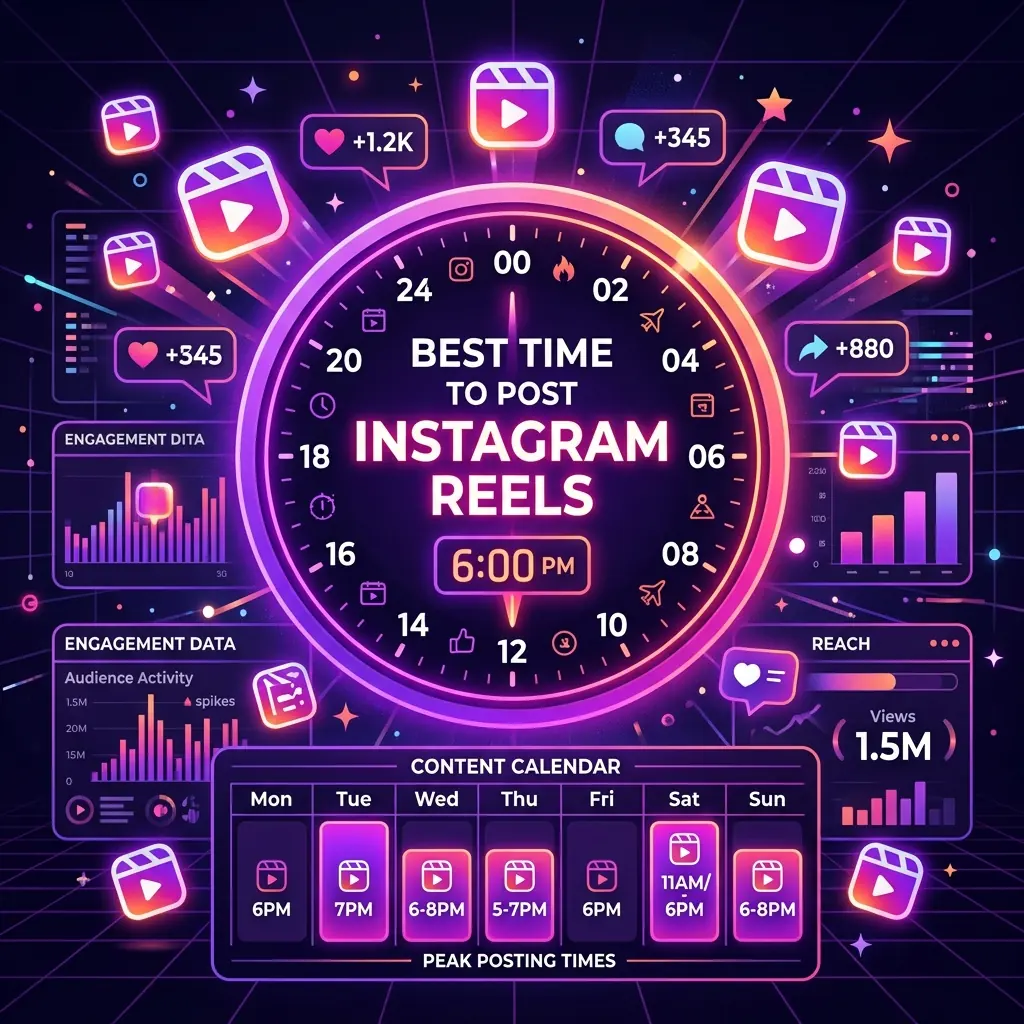
Let's skip the fluff and get straight to it.
You spend two hours on a Reel. The audio is trending, the hook lands in the first three seconds, the transitions work cleanly — and then you post it at 3 PM on a Wednesday because, why not? Six hours later: 47 views, 4 likes, zero new followers. One of those likes is your cousin. Another is a bot promoting teeth-whitening products.
Meanwhile, a creator in your exact niche posts a nearly identical video — same format, same trending audio — and it generates 80,000 views in 48 hours.
What went wrong? Almost certainly: posting time.
This is not a minor variable. Timing is one of the most immediately controllable levers available to any Instagram creator, and most people completely ignore it. They spend an hour perfecting caption wording but publish at 2 AM because they finally finished editing. They agonize over hashtag selection for 20 minutes but post on Sunday evening when their audience is offline or asleep.
This guide will change that. You will learn not just when to post, but why timing affects Reel performance at an algorithmic level, how to build a posting schedule tailored to your specific audience's behavior patterns, and what to do when generic recommended time slots are not producing the results you expect. Every piece of advice is practically applicable — no vague theory, no filler content.
Why Posting Time Is the Most Underrated Instagram Growth Variable
Most creators concentrate their optimization energy on three variables: content quality, caption writing, and hashtag strategy. All three matter. But creators obsess over these while completely ignoring something that is arguably more immediately impactful on distribution: the precise moment they hit the publish button.
Here is exactly what happens algorithmically when you publish an Instagram Reel.
Instagram does not instantly show your content to your entire follower base simultaneously. When you publish, the algorithm distributes your Reel to a small test segment of your audience — typically 5 to 10 percent of your followers. It then monitors what that sample group does within the following 30 to 60 minutes. Did they watch the Reel to completion? Did they rewatch it? Did they share it via DM? Did they visit your profile afterward?
Based on those early engagement signals, Instagram decides whether to push your Reel to a significantly wider audience — including non-followers on the Explore page, the Reels tab, and algorithm-driven recommendation feeds.

The direct implication: if you publish when your audience is asleep, commuting, or locked in back-to-back meetings, that initial test segment produces weak early engagement signals — not because your content is poor quality, but because your audience is simply too busy to watch. The algorithm observes low early engagement, deprioritizes the Reel in its distribution queue, and the video effectively disappears before it reaches the critical mass needed for organic growth.
Publish at the optimal time for your audience, and the identical Reel performs completely differently. The initial test group engages strongly, the algorithm receives positive behavioral signals, and it continues pushing the content to progressively wider audiences. This mechanism explains precisely why two creators can publish nearly identical content and experience dramatically different distribution results.
The Best Time Windows to Post Instagram Reels in 2026
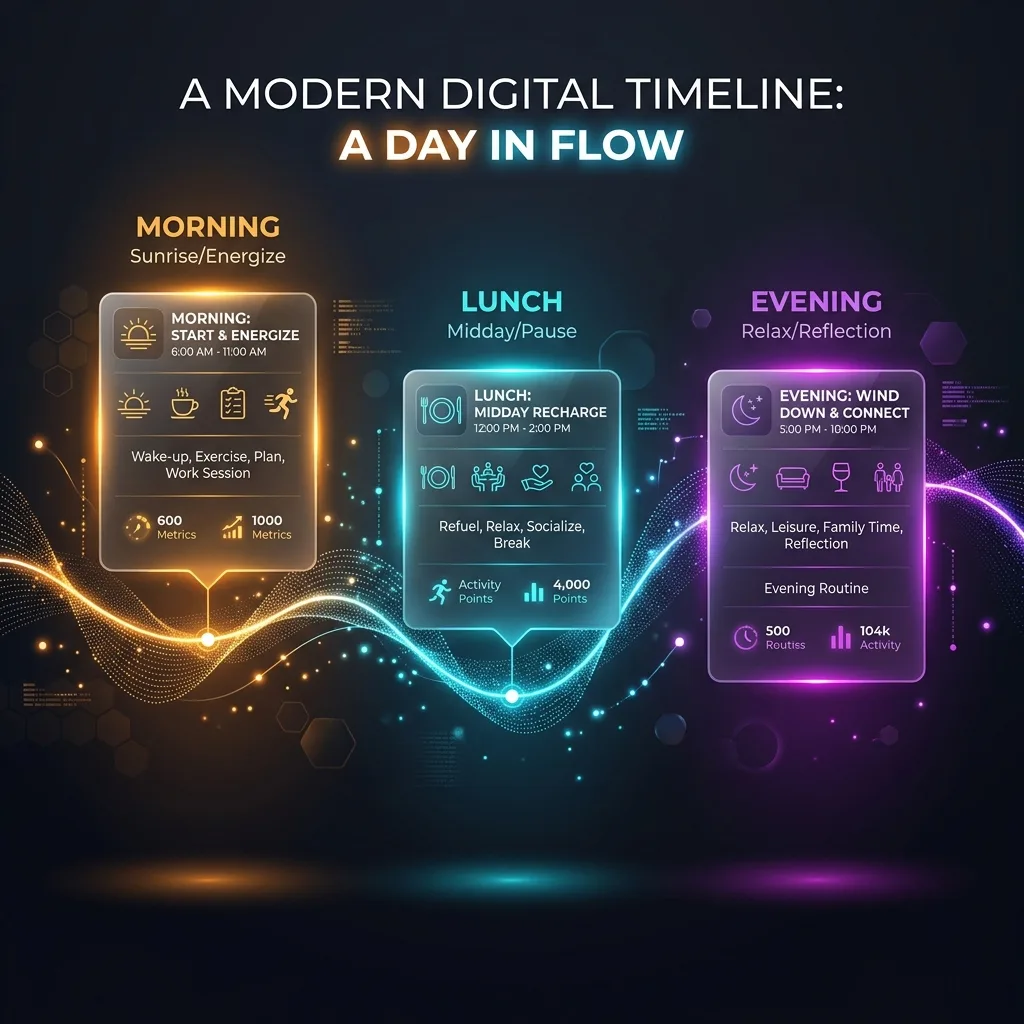
Early Morning Window: 7:00 AM – 9:00 AM
This window surprises many creators, but it is consistently one of the strongest posting slots in terms of initial engagement velocity. A substantial portion of Instagram's daily active users check their phones within 15 minutes of waking up. This morning scroll behavior is habitual, unhurried, and characterized by passive consumption mode — people are not yet in decision-making or problem-solving mode. They are simply consuming content while their brains warm up.
Posting during this window means your content is among the first things people encounter when their cognitive energy is freshest. Completion rates are characteristically higher during morning hours because people are not rushing toward any immediate obligation — they are in the pre-day browsing phase, which naturally favors longer watch times.
Practical calibration: If your target audience skews toward working professionals aged 25 to 40, this morning window is consistently excellent. If your audience trends younger — Gen Z or college students — they tend to sleep significantly later on weekdays, so you may need to shift your morning target to 9 or 10 AM to catch them at an equivalent point in their daily rhythm.
Lunch Hour Window: 12:00 PM – 1:00 PM
The midday scroll is practically a universal behavioral pattern among smartphone users. Whether someone is eating lunch at their work desk, sitting in a break room, or taking a few minutes away from whatever they were doing, they are consistently reaching for their phone. This 60-minute window generates solid engagement across virtually every content niche and audience demographic.
What makes the lunch window particularly valuable for Reel performance is that it represents a natural, dedicated break — people are not in the middle of something requiring their attention. They have a genuine chunk of discretionary time and they are actively filling it with content consumption. This translates to higher completion rates and more intentional engagement compared to stolen moments throughout the workday.
Evening Prime Time Window: 7:00 PM – 9:00 PM
This is the single most powerful posting window in the entire day for Instagram Reels performance. No qualification needed.
By 7 PM, the workday has ended for the majority of your audience. People are home, decompressing, relaxed, and in genuine entertainment-seeking mode. No emails require urgent responses. No meetings interrupt the experience. They are on the couch, finishing dinner, or settling in for the evening — in a relaxed, receptive mental state that is optimal for content consumption and social sharing.
The combination of peak user activity volume and a fundamentally relaxed audience mental state means people are meaningfully more likely to watch Reels to completion, share content with friends via DMs, engage in comments, and visit profiles of creators they discover. Reels published during this evening window consistently demonstrate higher share-per-view ratios compared to almost any other time slot throughout the day.
Best Time to Post Reels by Day of the Week
Best Time to Post Reels on Monday
Monday mornings are challenging for most people, and Instagram engagement data consistently reflects that reality. The post-weekend mental transition back to work responsibilities means people are catching up on emails, handling accumulated tasks, and gradually re-establishing their weekly focus. However, by 11 AM, that initial Monday chaos typically subsides. The lunch window on Monday (11:00 AM – 1:00 PM) is a reliably strong performance slot.
Avoid posting early Monday morning. Most of your audience is in reactive, task-management mode — not content discovery mode.
Best Time to Post Reels on Tuesday
Tuesday is consistently one of the highest-performing days of the week for Instagram Reels distribution. Most people have re-established their weekly rhythm — they are engaged with their week but not yet experiencing the midweek fatigue. The best time to post Reels on Tuesday is in the morning between 7:00 AM – 10:00 AM. This morning scroll reliably generates higher watch times, more saves, and stronger profile visit rates than almost any other window.
Best Time to Post Reels on Wednesday
The best time to post Reels on Wednesday is between 7:00 AM – 10:00 AM, mirroring Tuesday's strong morning engagement. Wednesday serves as another peak day for content consumption, as people look for a midweek pick-me-up. If you can only commit resources to two high-effort Reels per week, schedule them for Tuesday and Wednesday mornings.
Best Time to Post Reels on Thursday
Thursday carries a distinctive psychological energy — people can almost feel the weekend approaching. That pre-Friday optimism makes audiences noticeably more receptive to content engagement. The best time to post Instagram Reels on Thursday is the lunch window from 12:00 PM – 2:00 PM. Thursday is particularly effective for publishing more entertaining, lighter, or upbeat Reels.
Best Time to Post Reels on Friday
The best time to post IG Reels on Friday is between 7:00 AM – 9:00 AM. On Fridays, catching your audience during the morning window is essential because engagement opportunity drops sharply by the afternoon. By midday Friday, people begin mentally transitioning into weekend mode — making social plans and wrapping up responsibilities. Avoid posting on Friday evenings entirely as audiences are typically out socially.
Best Time to Post Reels on Saturday
Weekends operate on a fundamentally different behavioral rhythm. Many people sleep later, meaning early morning posts significantly underperform. The best time to post Reels on Saturday is between 9:00 AM – 12:00 PM. By late morning, most people are awake and in a relaxed weekend browsing state — scrolling unhurried and receptive.
Best Time to Post Reels on Sunday
Similar to Saturday, the best time to post Reels on Sunday is 9:00 AM – 12:00 PM. However, Sunday evenings (6:00 PM – 8:00 PM) can also work well for specific content categories — motivational, educational, and career-focused content resonates well as people psychologically prepare for the upcoming week.
Best Time to Post Instagram Reels for Maximum Reach vs. Engagement
Not all timing goals are identical. The best time for reach relates to posting when the maximum number of casual viewers are online, often pushing toward the evening prime time slot (7:00 PM – 9:00 PM). This helps cast the widest net. The best time for engagement, however, focuses on depth: saves, comments, and shares. For engagement, morning windows (7:00 AM – 9:00 AM) often perform better because your most loyal core audience is starting their day with a focused, unhurried mindset.
Best Time to Post Reels to Go Viral
While virality isn't fully predictable, you can tilt the odds. Generating massive viral reach requires extreme velocity in early engagement. The best time to post Reels to go viral is typically Tuesday or Wednesday evening around 7:00 PM. This prime time combines peak user active volume with relaxed consumption modes, leading to higher shareability — and shares are the engine of "instagram reels viral time" explosions.
Best Time to Post Instagram Reels by Time Zone (US, UK, India)
Your optimal posting time must be anchored to your target audience's primary time zone, not your local clock. If you live in India but target an audience primarily in the United States, posting at 9:00 AM IST means you are hitting the US audience around 11:30 PM EST—when most are asleep. Always review Instagram Insights to locate where your most engaged followers are geographically. If targeting multiple zones, aim for overlaps—for instance, 8:00 AM EST (US) neatly aligns with 1:00 PM BST (UK) and 5:30 PM IST (India), ensuring solid traffic across three continents.
What about the query, "best time to post reels on instagram today"? The reality is that today's best time is heavily influenced by the day of the week and immediate cultural events. Always check your audience insights specifically for the current day rather than leaning exclusively on long-term historical averages.
How Instagram's Reels Algorithm Uses Timing to Determine Distribution
Understanding the optimal posting times becomes more actionable when you understand the specific algorithmic mechanisms that make timing matter so much for Reel distribution.
Watch-through rate is the single most weighted signal in Instagram's Reels ranking system. What percentage of viewers watch your Reel from the first frame to the final frame? A Reel with 70 percent watch-through rate will consistently receive broader distribution than a Reel with 30 percent watch-through — regardless of which has more total views. Posting when your audience is genuinely relaxed and has uninterrupted time means they are more likely to watch the complete video rather than half-watching while doing something else.
Engagement velocity measures how quickly your Reel accumulates likes, comments, shares, and saves after initial publication. Post at 11 PM when your audience is asleep or in a timezone where it is the middle of their workday, and engagement velocity crawls. The algorithm interprets slow early velocity as a signal of low content quality or relevance — regardless of the actual content quality — and limits further distribution accordingly.
Share-to-view ratio is becoming increasingly weighted in Instagram's 2026 algorithm. When someone sends your Reel to a specific friend via DM, it signals to Instagram that your content is socially conversation-worthy and personally relevant. People in entertainment and relaxation mode — evenings and weekends — are significantly more likely to share Reels with friends than people in focused work mode. This is why evening window posts consistently generate superior share ratios.
Profile visits and follows after watching your Reel signal that your content made someone curious enough to want to see more. This type of exploratory behavior is most common when people are in a relaxed, open, discovery-oriented state — which again points toward evenings and weekend mornings as the optimal windows for generating sustainable follower growth from individual Reels.
How to Find Your Personally Optimal Instagram Reels Posting Times
Here is the critical caveat: the posting windows above are proven starting points, but they are not the final answer for every account. Your audience has specific behavioral patterns unique to your niche and follower demographics. A fitness creator whose audience consists primarily of early-morning gym-goers has a meaningfully different optimal posting time than a food creator whose audience primarily browses after evening dinner. The goal is to run a structured personal experiment and identify your specific performance sweet spots.
Step 1: Establish Your Performance Baseline (Weeks 1–2)
Post one Reel per day, rotating consistently through the three established best windows — morning (7 to 9 AM), lunch (12 to 1 PM), and evening (7 to 9 PM). Track performance in a simple spreadsheet: views at 24 hours, views at 48 hours, watch-through completion rate, shares received, and saves generated. Do not make performance judgments based on individual posts — you are building a statistically meaningful baseline dataset.
Step 2: Deliberately Test Off-Peak Windows (Weeks 3–4)
Publish at times you would normally avoid: 10 PM, 6 AM, 3 PM on weekdays. You are deliberately searching for hidden performance pockets specific to your audience. Some niches — those with international audiences, shift workers, or specific geographic demographics — show surprising engagement spikes during hours that generic advice would dismiss. You cannot identify these audience-specific patterns without intentional off-peak testing.
Step 3: Identify Your Top 2–3 Performing Windows From Your Data
After four weeks of consistent data collection, performance patterns will emerge clearly. You might discover that your audience is systematically 40 percent more active on Tuesday mornings than Thursday afternoons. Or that your specific followers are most active at 9 PM rather than the general recommendation of 7 PM. These audience-specific insights are consistently more valuable than any general industry guide — including this one.
Step 4: Lock In a Consistent, Repeatable Posting Schedule
Once you have identified your personally optimal posting windows from actual performance data, commit to them consistently. Posting consistency itself signals reliability to the Instagram algorithm. When you publish on a predictable schedule, your most engaged followers begin anticipating your content — and early engagement from loyal, habitual viewers is one of the strongest distribution boosts available to any creator.
Step 5: Revisit and Recalibrate Every 6–8 Weeks
Audience behavior is not static across seasons or life events. Summer months change typical scrolling patterns. Major cultural events shift attention and availability. New Instagram features alter how people consume content within the app. What generates optimal results in January may perform noticeably differently in July. Build a recurring calendar reminder to retest your posting schedule every couple of months and update your strategy based on current performance data.
Common Posting Time Mistakes That Are Quietly Killing Your Instagram Reach
Publishing immediately when editing is complete rather than when your audience is active. This is the most widespread and costly timing mistake. You finish editing at 11 PM and post immediately out of excitement or relief. Your audience is sleeping. Schedule it using Later, Buffer, or Instagram's native Creator Studio tool — scheduling takes under 60 seconds and produces measurably better distribution results.
Publishing at precisely the same time every single day without variation. This might appear to be consistency, but always posting at an identical time can create competing distribution cycles within Instagram's system. Vary your posting times slightly within your target performance windows to avoid potential self-competition in the algorithm's content queue.
Ignoring geographic time zone distribution in your audience. If your followers are split between India and the United States, morning in Mumbai is the middle of the night in New York. Review Instagram Insights to identify where your most engaged followers are geographically located. Your optimal posting time should be anchored to your audience's time zone — not your own.
Publishing multiple Reels within the same 24-hour period. Instagram's distribution system can suppress multiple consecutive posts from the same account within a compressed time window. If you have two strong Reels ready simultaneously, publish one now and schedule the second for the following day. Spacing between posts consistently matters for distribution reach.
The Best Time to Post Instagram Reels: Summary and Framework
The best time to post Instagram Reels in 2026, based on consistent cross-niche performance data, is Tuesday or Wednesday between 7 AM and 10 AM in your audience's primary time zone. The second strongest option is any weekday evening between 7 PM and 9 PM. For weekend posting, target Saturday between 9 AM and 12 PM.
But the most valuable step — the one that will genuinely separate your account's growth from creators who rely on generic advice — is moving from these general recommendations to personalized data gathered from your own audience. Use the first month to systematically test, track, and identify your specific followers' behavioral patterns. Then build a posting schedule around what the data actually demonstrates rather than what a guide suggests should work.
Timing is a performance multiplier. A mediocre Reel published at the optimal time for your audience will perform adequately. A genuinely excellent Reel published at the right time for your specific followers — that combination is how Instagram accounts grow from 2,000 to 20,000 followers within weeks rather than years. You have already invested the effort to create quality content. Stop leaving distribution results on the table by publishing when no one who matters is actively watching.
Have questions about optimal posting times for your specific niche or audience demographic? Leave a comment below — the GrabReel Team reads and responds to every one.
Frequently Asked Questions
1. What is the best time to post Instagram Reels in 2026?
The best overall time to post Instagram Reels in 2026 is generally Tuesday or Wednesday morning between 7:00 AM and 10:00 AM, as well as weekday evenings between 7:00 PM and 9:00 PM.
2. Does posting time really affect how many views a Reel gets?
Yes. Posting when your audience is active leads to strong initial engagement in the first 30–60 minutes, which signals to the algorithm to push your Reel to a wider non-follower audience.
3. Is there a universal best time to post Reels, or does it vary by audience?
While general benchmarks exist, the optimal time is ultimately unique to your specific audience. You should use your own Instagram analytics and A/B test off-peak windows to locate your personal best posting time.
4. What is the best time to post Reels on a weekday vs. weekend?
We recommend early mornings (7:00 AM – 10:00 AM) or evenings (7:00 PM – 9:00 PM) for weekdays. On weekends, user behavior is more relaxed, making the mid-morning window (9:00 AM – 12:00 PM) the strongest performer.
5. What time should I post Reels if my audience is in the United States?
If your target audience is in the US, anchor your schedule to EST or PST time zones. For instance, posting at 8:00 AM EST is generally robust for reaching East Coast commuters and early-rising West Coast viewers alike.
6. How early should I post a Reel before my audience wakes up?
You generally want to post exactly as the wave of activity starts—not hours beforehand. Posting right around 7:00 AM ensures your content is fresh at the top of the feed when users do their first morning scroll.
7. Can I schedule Instagram Reels in advance to post at the best time?
Yes, you can schedule Reels using Instagram's native advanced settings or third-party tools like Buffer and Later. This is crucial for hitting optimal windows without having to be manually online.
8. What happens if I post a Reel at the wrong time?
If you post when your audience is asleep or busy, your initial test group produces weak early engagement signals. The algorithm often deprioritizes the Reel, preventing it from reaching the broader explore page.
9. How do I check when my Instagram followers are most active?
Go to your Instagram Professional Dashboard, tap Insights, then Total Followers. Scroll to the absolute bottom to see your Most Active Times sorted by hours and days.
10. Does the best time to post Reels change seasonally?
Yes. Seasonal shifts such as summer holidays, school schedules, and major cultural events change audience routines. You should deliberately re-test your posting schedule every 6–8 weeks to stay perfectly calibrated.